
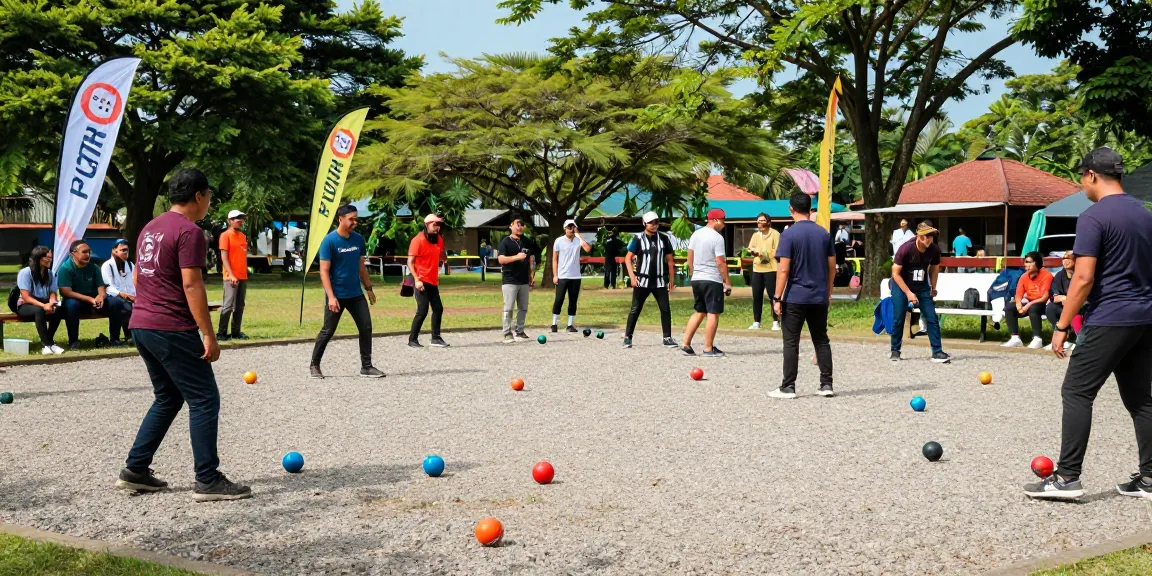

Understanding Petanque: The Basics of the Game
Petanque, a popular sport originating from France, has found its way into many countries, including Indonesia. Its unique blend of skill, precision, and social interaction makes it a favorite among enthusiasts. The game is often played in open spaces, where players aim to throw metal balls as close as possible to a small wooden ball called the “cochonnet.” In recent years, the sport has gained traction globally, and organizations like fopikotapalu.org are instrumental in promoting it within Indonesia. This article will explore the fundamentals of petanque, its history in Indonesia, and its organizational framework to support this engaging sport.
What is Petanque?
Petanque is a precision sport where players take turns throwing metal balls with the objective of landing as close as possible to a target ball. Typically played on gravel or dirt surfaces, the game can be enjoyed by players of various ages and skill levels. The simplicity of the equipment and the straightforward rules make petanque accessible, encouraging social interaction and friendly competition.
History of Petanque in Indonesia
The history of petanque in Indonesia can be traced back to its introduction by French expatriates, who established the sport in several locations such as Jakarta, Lombok, Yogyakarta, and Bali. These expatriates built petanque courts as recreational facilities in hotels, notably at establishments like the Novotel in Kuta and Horizon Ancol, allowing both locals and tourists to experience the game. Despite its introduction, petanque primarily attracted a niche audience, particularly expatriates, until the Indonesian government recognized its potential.
It wasn’t until the 2011 SEA Games in Jakarta and Palembang that petanque achieved official standing as a competitive sport in Indonesia. The event catalyzed the establishment of the Federasi Olahraga Petanque Indonesia (FOPI) on March 11, 2011, providing a supportive structure for the sport and organizing local competitions.
Rules and Regulations of Petanque
Like many sports, petanque has specific rules and regulations that govern gameplay. Here are some key aspects:
- Team Composition: Petanque can be played as singles, doubles, or triples. Each team consists of one to three players.
- The Playing Area: Games are typically played on a flat surface measuring at least 15 meters long and 4 meters wide.
- Scoring: Points are scored based on the proximity of the team’s balls to the cochonnet after all players have thrown.
- Throwing Technique: Players must stand inside a designated circle while throwing, and the ball must land in the designated playing area.
FOPI Kota Palu: Organization and Activities
FOPI Kota Palu plays a crucial role in the promotion and development of petanque in the region. Under the auspices of the FOPI in Central Sulawesi and affiliated with KONI Kota Palu, the organization is dedicated to building a strong framework for the sport. With initiatives that engage the community and foster talent, FOPI Kota Palu aims to elevate the standards of petanque and increase its popularity among local and national audiences.
Overview of FOPI Kota Palu Structure
The organizational structure of FOPI Kota Palu consists of various committees and working groups dedicated to different aspects of petanque. These include:
- Administration: Manages the general operations, finances, and compliance with national regulations.
- Coaching and Development: Focuses on training coaches and developing programs to nurture new talent.
- Events and Marketing: Organizes tournaments and promotional activities to raise awareness of the sport.
Community Engagement Initiatives
FOPI Kota Palu is committed to fostering a strong community around petanque. They achieve this through various initiatives:
- Workshops and Clinics: Regular training sessions aimed at teaching new players the fundamentals of the game.
- School Programs: Collaborating with local schools to introduce petanque as part of physical education.
- Social Events: Community tournaments and friendly matches encourage participation and camaraderie.
Upcoming Events and Tournaments
FOPI Kota Palu is actively engaged in organizing events that not only promote competition but also build community spirit. Upcoming tournaments include local championships and friendly matches that encourage participation across all age groups. These events are designed to attract not only seasoned players but also newcomers, thereby expanding the reach of petanque in the region.
Getting Started in Petanque: Essential Equipment
Getting started in petanque requires minimal equipment, making it an economical sport for beginners. Understanding what is needed is the first step toward joining the petanque community.
Choosing the Right Petanque Balls
When selecting petanque balls, players should consider the following:
- Weight: Most balls weigh between 650 to 800 grams. The right weight often depends on the player’s strength and throwing style.
- Material: Look for balls made from steel for durability and performance.
- Grip: Some balls come with a textured surface for better grip, which can be beneficial for beginners.
Recommended Gear for Beginners
In addition to petanque balls, beginners should consider investing in:
- Footwear: Comfortable shoes with good grip are essential, as players often play on gravel or uneven surfaces.
- A Measuring Tape: Useful for determining scores and ensuring fair play.
- Transport Bags: To carry balls and other equipment, ensuring that everything is well-organized.
Setting Up a Petanque Court
Setting up a petanque court is straightforward. Here are some basic steps:
- Find a Suitable Location: A flat area measuring at least 15m by 4m, ideally with a gravel or dirt surface.
- Mark the Boundaries: Use lines or stones to outline the court.
- Designate Throwing Circles: Mark areas where players must stand while throwing their balls.
Training and Improving Skills in Petanque
Like any sport, improving in petanque takes practice and dedication. Here are essential tips for enhancing your skills on the court.
Fundamental Techniques for Beginners
Beginners should focus on mastering fundamental techniques, including:
- Grip: Hold the ball firmly but not too tightly to allow for a smooth release.
- Stance: Maintain a balanced stance with feet shoulder-width apart to ensure stability while throwing.
- Aiming: Develop accuracy by practicing targeted throws, focusing on the cochonnet.
Strategies to Enhance Your Game
As players become more comfortable with the basics, they can incorporate advanced strategies, such as:
- Reading the Terrain: Understanding how the surface affects ball movement and adjusting throws accordingly.
- Playing Psychologically: Observing opponents’ behaviors and using mental strategies to gain a competitive edge.
- Team Coordination: Effective communication with teammates can significantly enhance performance in doubles or triples games.
Common Mistakes and How to Avoid Them
New players often make common mistakes. Here are some to watch out for:
- Incorrect Grip: A poor grip can lead to erratic throws. Regular practice can help find the right grip.
- Improper Stance: A lack of balance can affect throwing precision. Always ensure a stable stance before throwing.
- Neglecting Strategy: Focusing solely on throwing without considering tactics can lead to missed opportunities.
The Future of Petanque in Indonesia: Trends and Opportunities
The future of petanque in Indonesia looks promising, with various trends indicating its growth within the sporting community. Organizations like FOPI Kota Palu are pivotal in this evolution.
Growth of Petanque among Youth in Indonesia
As interest in petanque increases among younger generations, schools and youth clubs are starting to include it in their physical education programs. This trend not only encourages physical activity but also social interaction and teamwork.
Impact of Local Events on Petanque Popularity
Local tournaments and national competitions have raised awareness of the sport and encouraged more participation. This increased visibility leads to potential sponsorships and partnerships that can further enhance the infrastructure and resources available for aspiring players.
Vision for FOPI Kota Palu by 2026
Looking ahead, FOPI Kota Palu envisions a vibrant petanque community where the sport plays a vital role in social cohesion and local culture. By 2026, the organization aims to have expanded its outreach programs, developed local talents, and established petanque as a staple in community events across the region.
What are the key rules of petanque?
The essential rules include team composition, scoring methodology, and the designated playing area specifics that govern the structure of play.
How can I improve my petanque skills?
Improving petanque skills involves practicing fundamental techniques and implementing strategic gameplay approaches to enhance performance on the court.
Are there competitions for petanque in Kota Palu?
Yes, FOPI Kota Palu organizes local championships and friendly matches, providing regular opportunities for players to engage in competitive play.
What equipment do I need to play petanque?
Players require metal petanque balls, comfortable footwear, a measuring tape, and transport bags to effectively enjoy the sport.
How does FOPI Kota Palu support local athletes?
FOPI Kota Palu provides training, organizes competitions, and engages in community outreach to develop and support local athletes in their petanque journey.